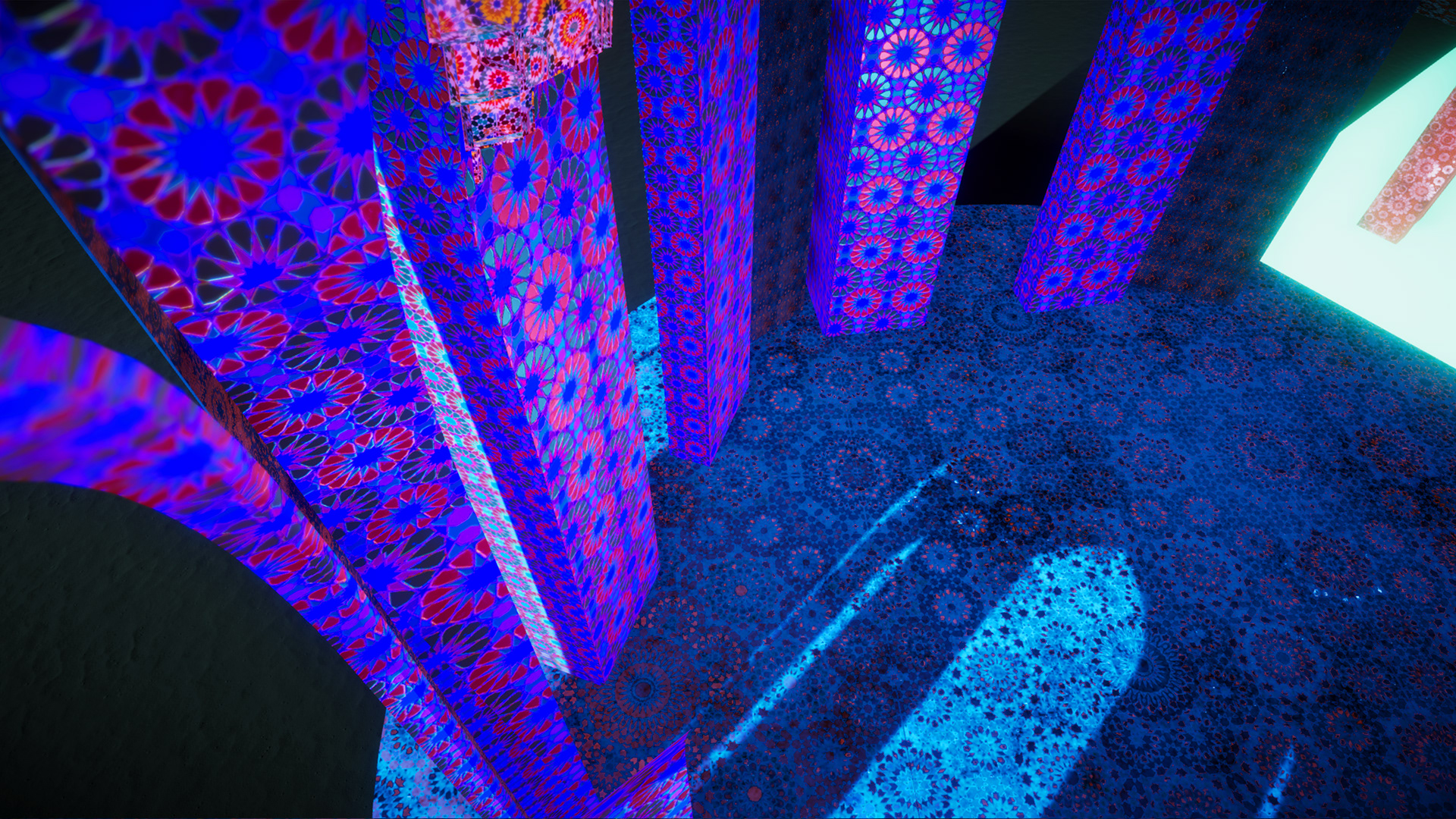
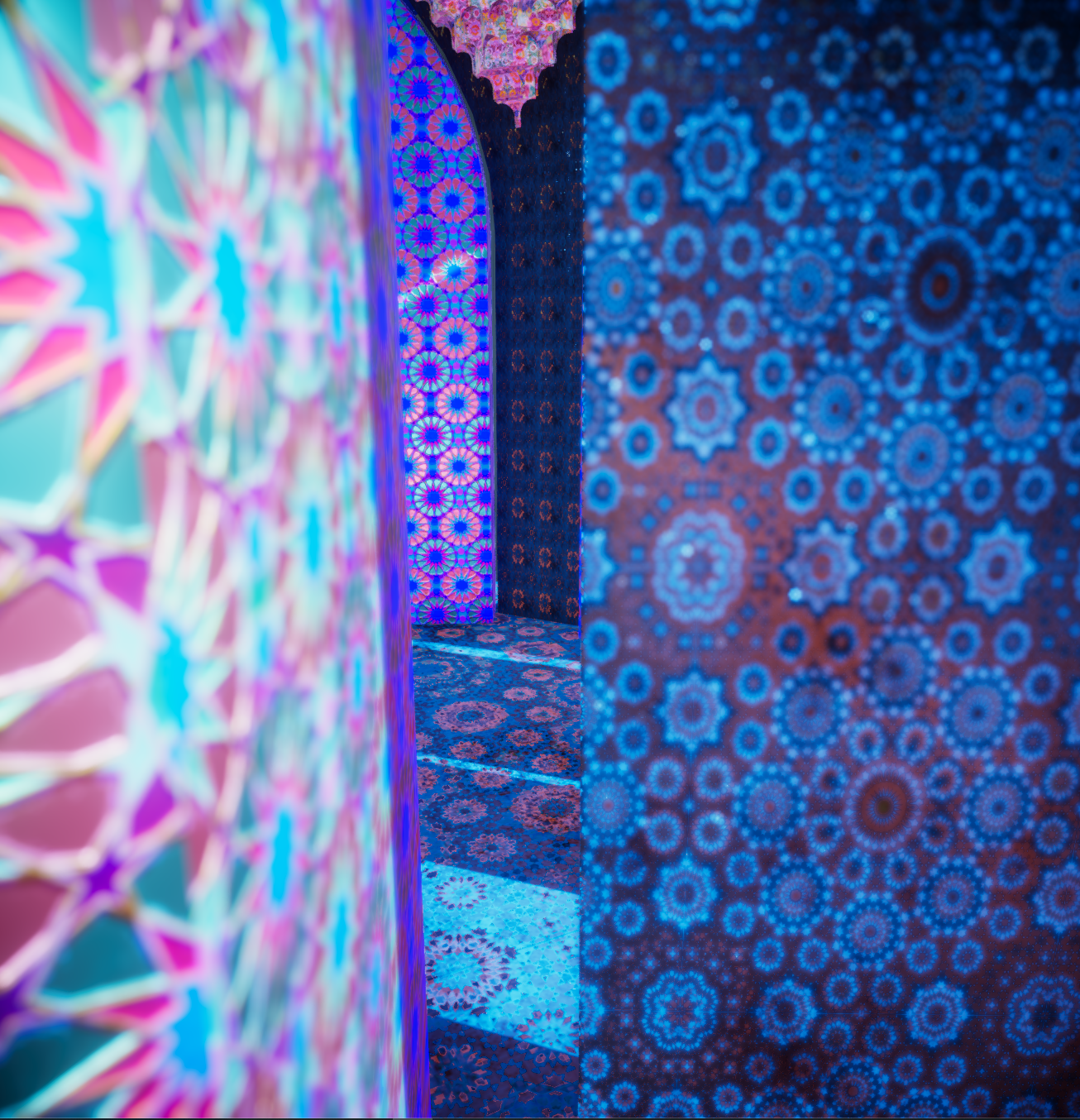
The virtual production was complex; many pieces had to come together to build a working VR installation. From analogue drawings to coding in Unity, here is an overview of the software and techniques used:
Drawings ⟷ analogue
Digitalising & 3D textures ⟷ Adobe Illustrator, Photoshop, Substance Designer
3D modelling of three Islamic architectures & dunes ⟷ Autodesk Maya, Cinema 4D
Texturing ⟷ Substance Designer, Cinema 4D, Unity
Lighting ⟷ Unity
Animation of architecture, textures & lights ⟷ Cinema 4D, Unity, After Effects
VR development ⟷ Unity, Steam
Sound design ⟷ Logic Pro X
Digitalising & 3D textures ⟷ Adobe Illustrator, Photoshop, Substance Designer
3D modelling of three Islamic architectures & dunes ⟷ Autodesk Maya, Cinema 4D
Texturing ⟷ Substance Designer, Cinema 4D, Unity
Lighting ⟷ Unity
Animation of architecture, textures & lights ⟷ Cinema 4D, Unity, After Effects
VR development ⟷ Unity, Steam
Sound design ⟷ Logic Pro X
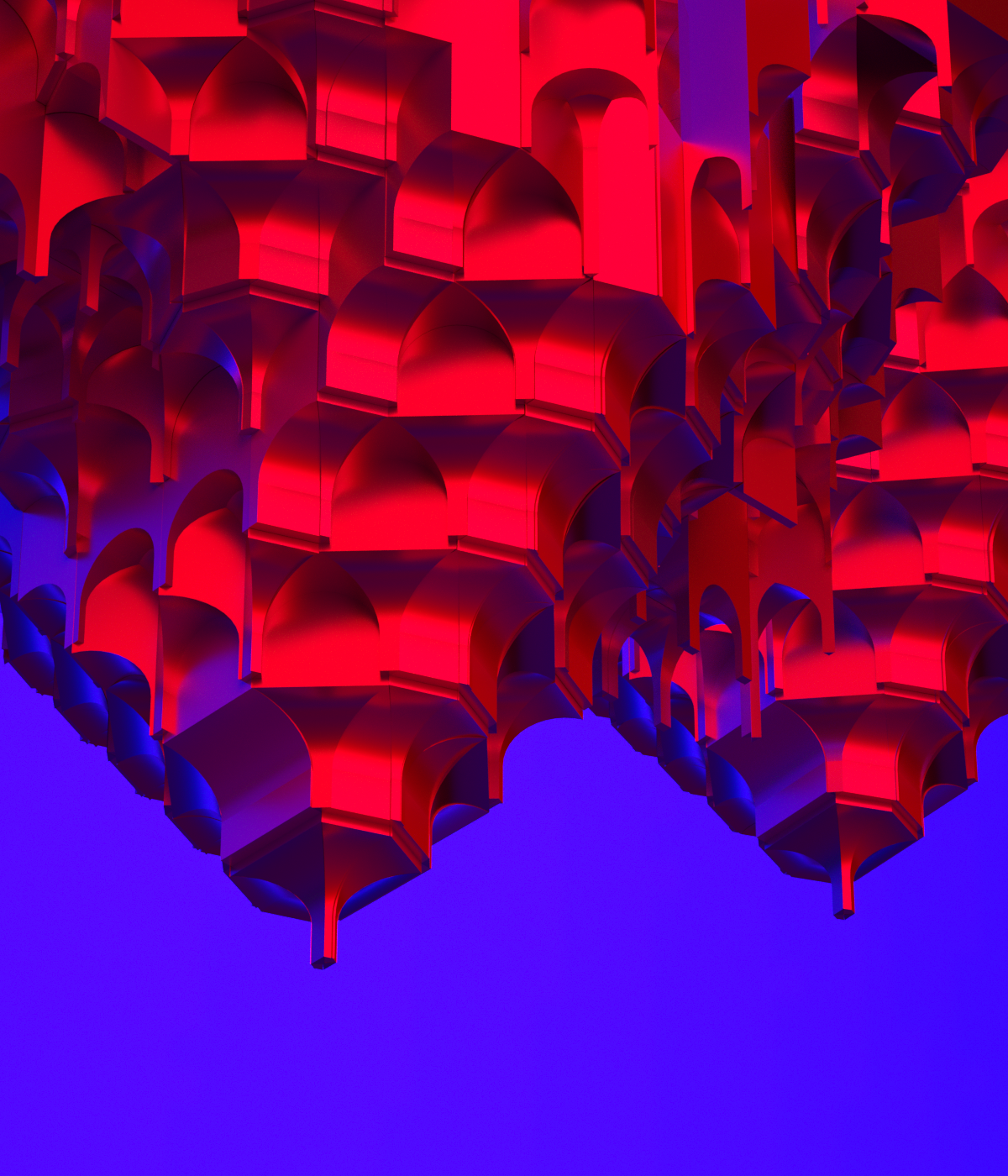
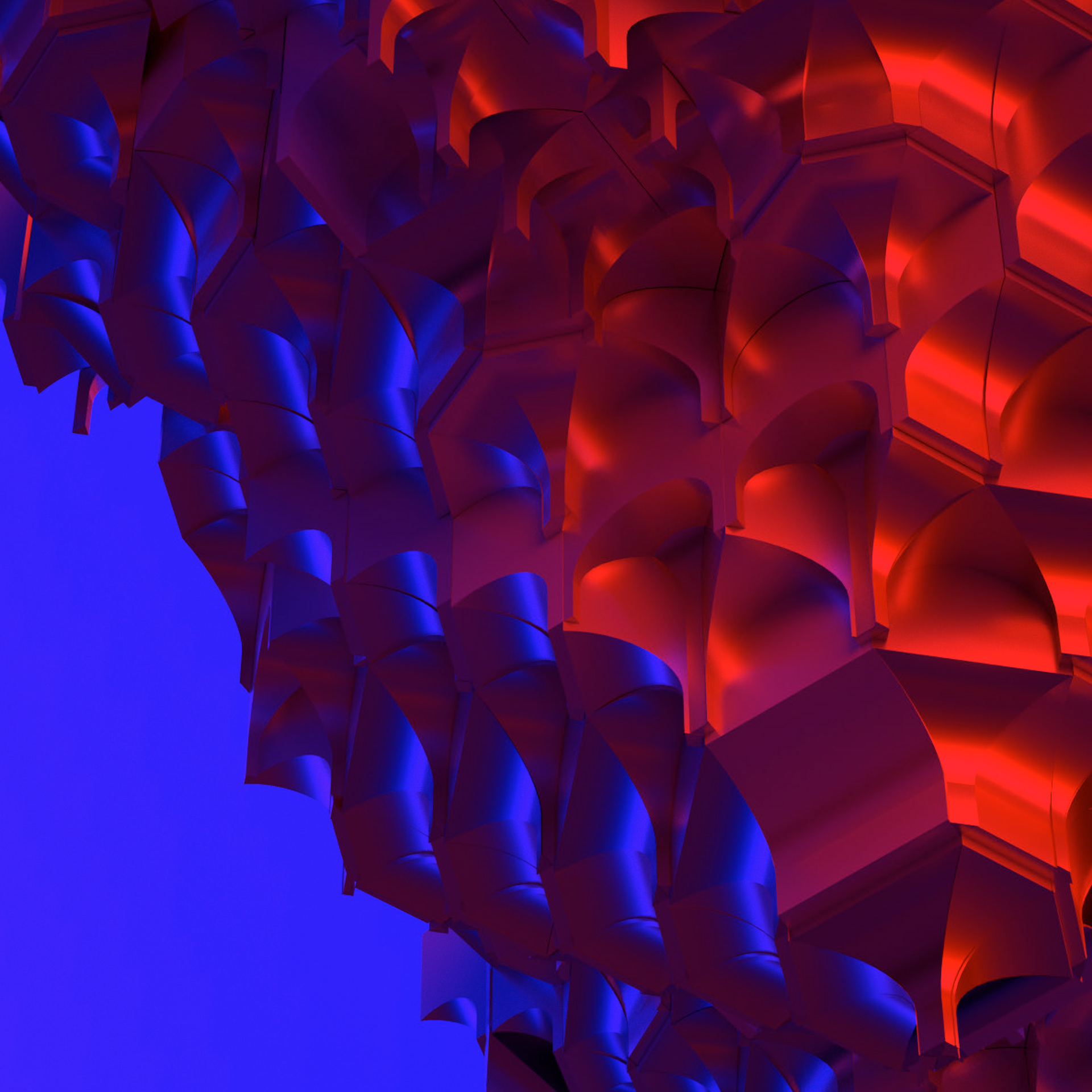
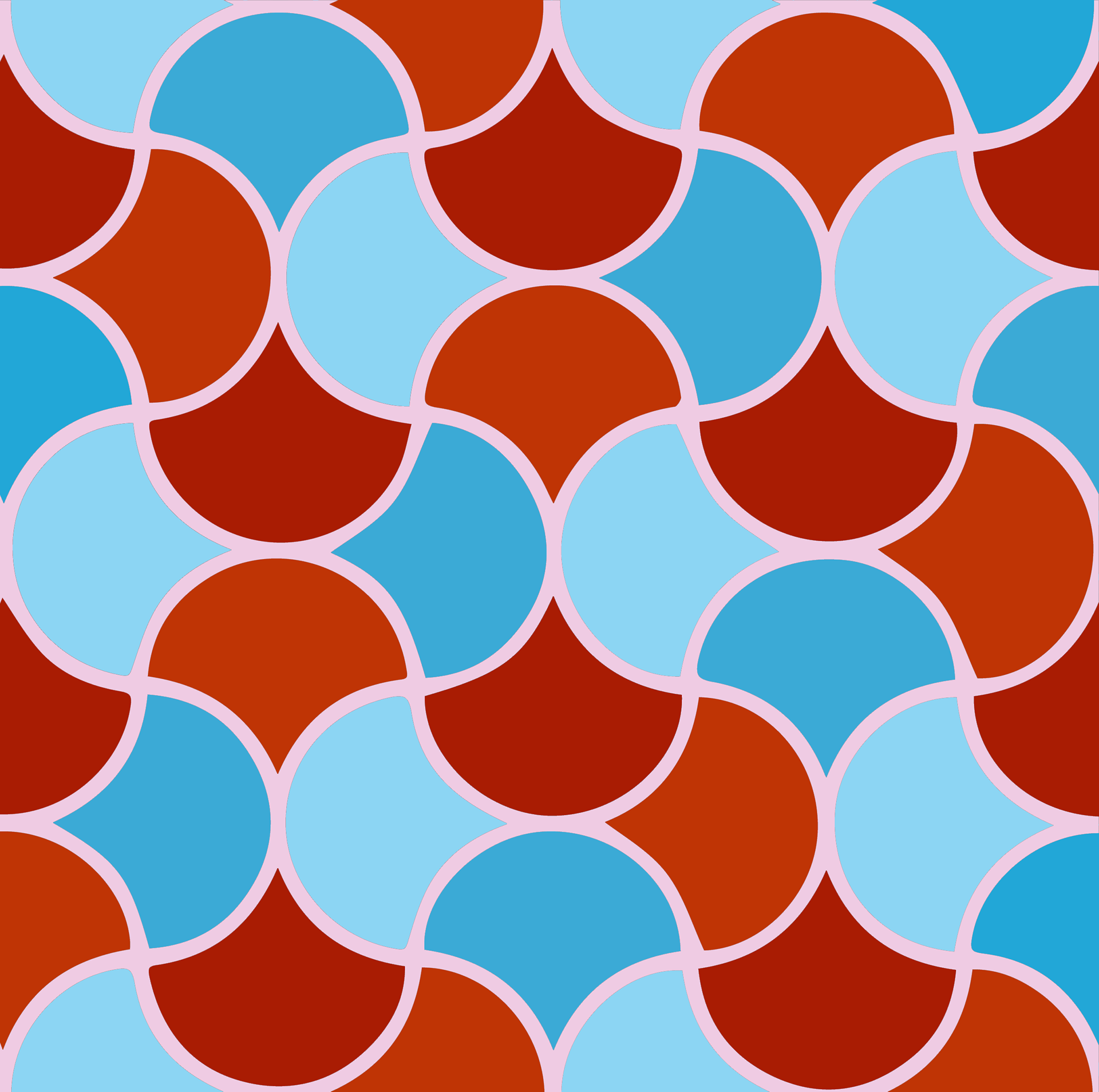
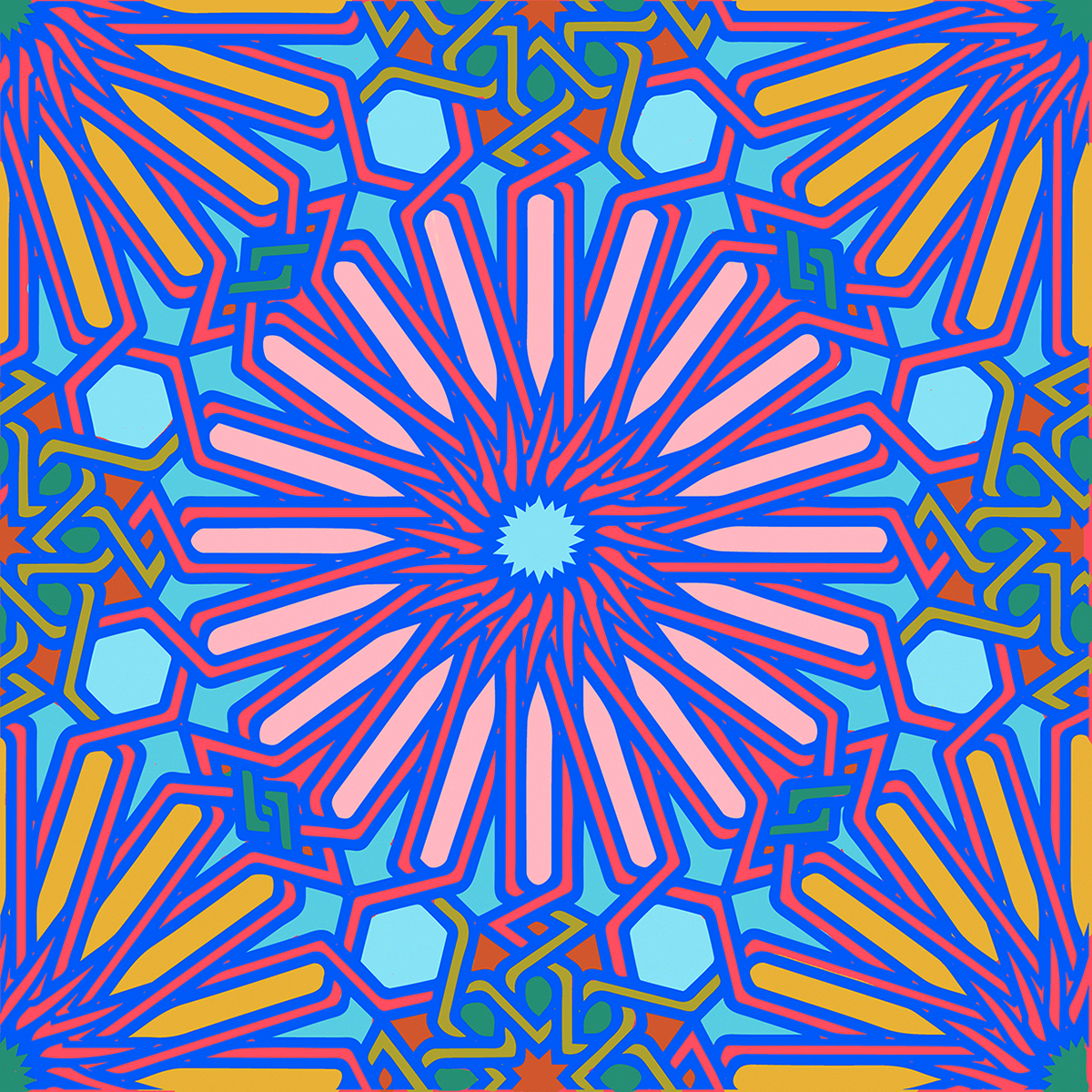
"As a 3D artist, I used the geometric visual language of Islamic art to build an installation in virtual reality — a digital palace covered in Islamic geometric patterns I drew by hand. This didn't just give a traditional art form a new platform; through my own visual style it gave the installation a personal note, mystical and colourful. It was important to me that visitors can teleport anywhere in the space — outside the room, and even upwards — so that they become, in a sense, omnipresent."
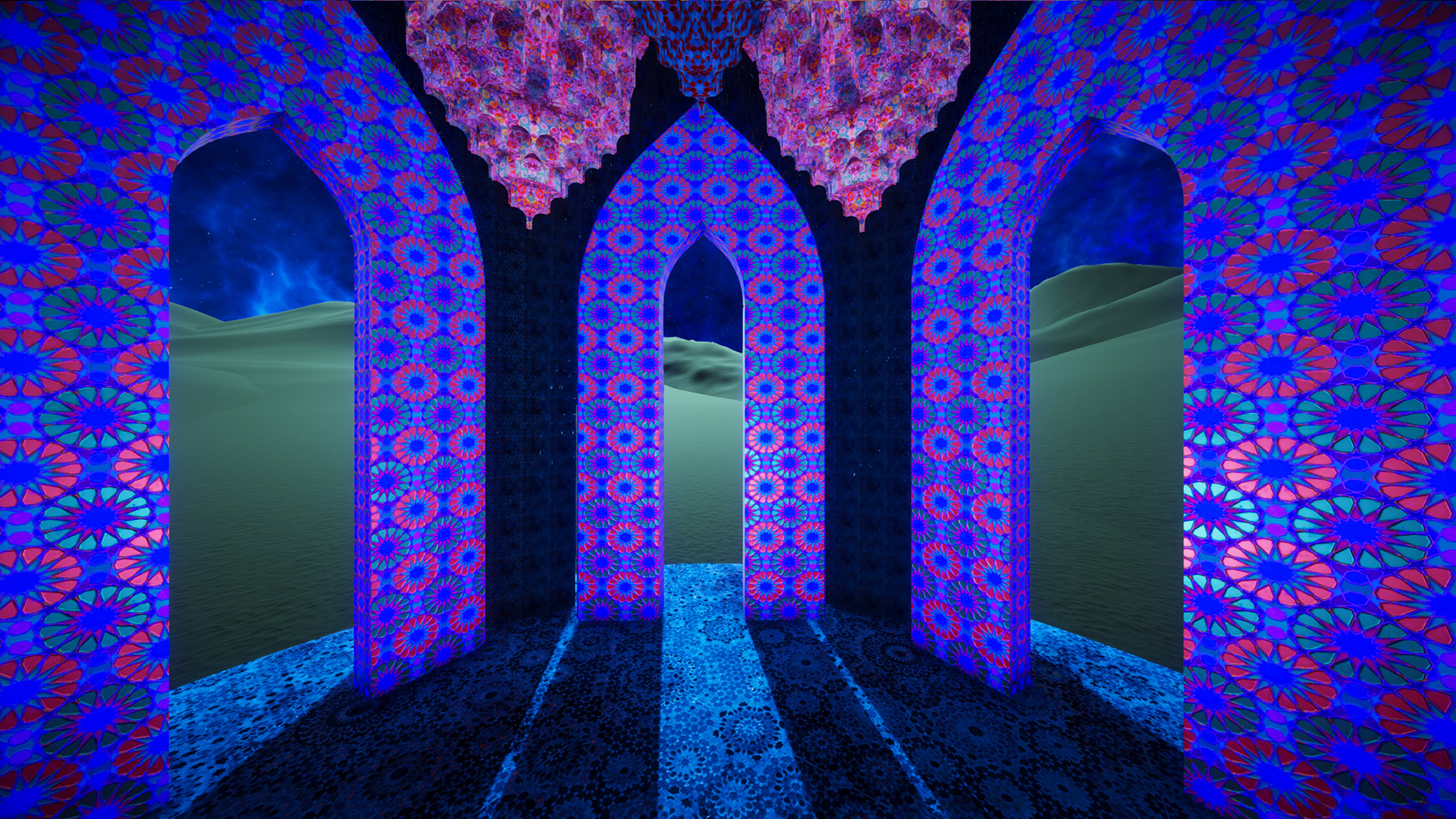
⟷ First room (spawn location)
HALLWAY ⟷
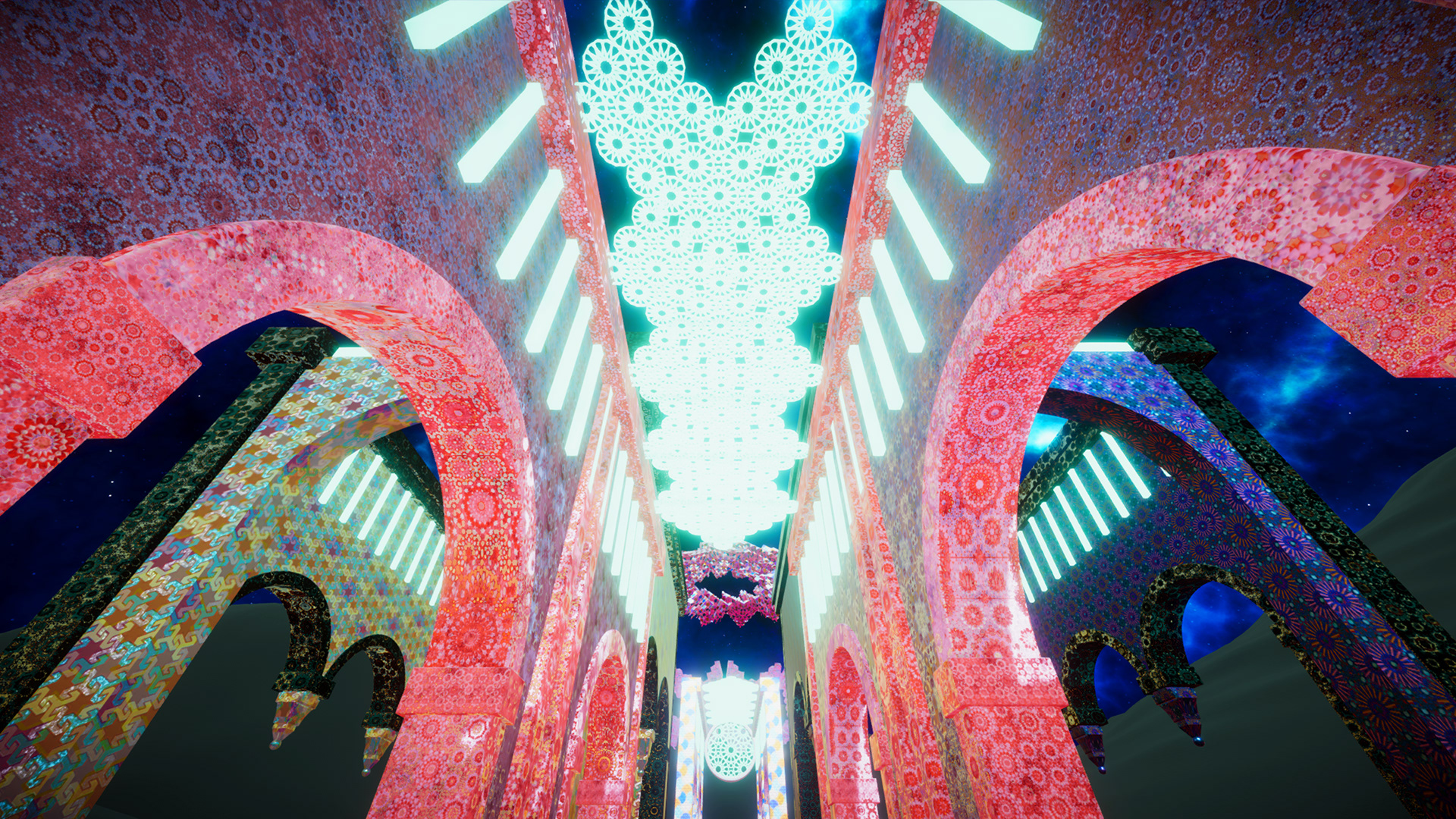
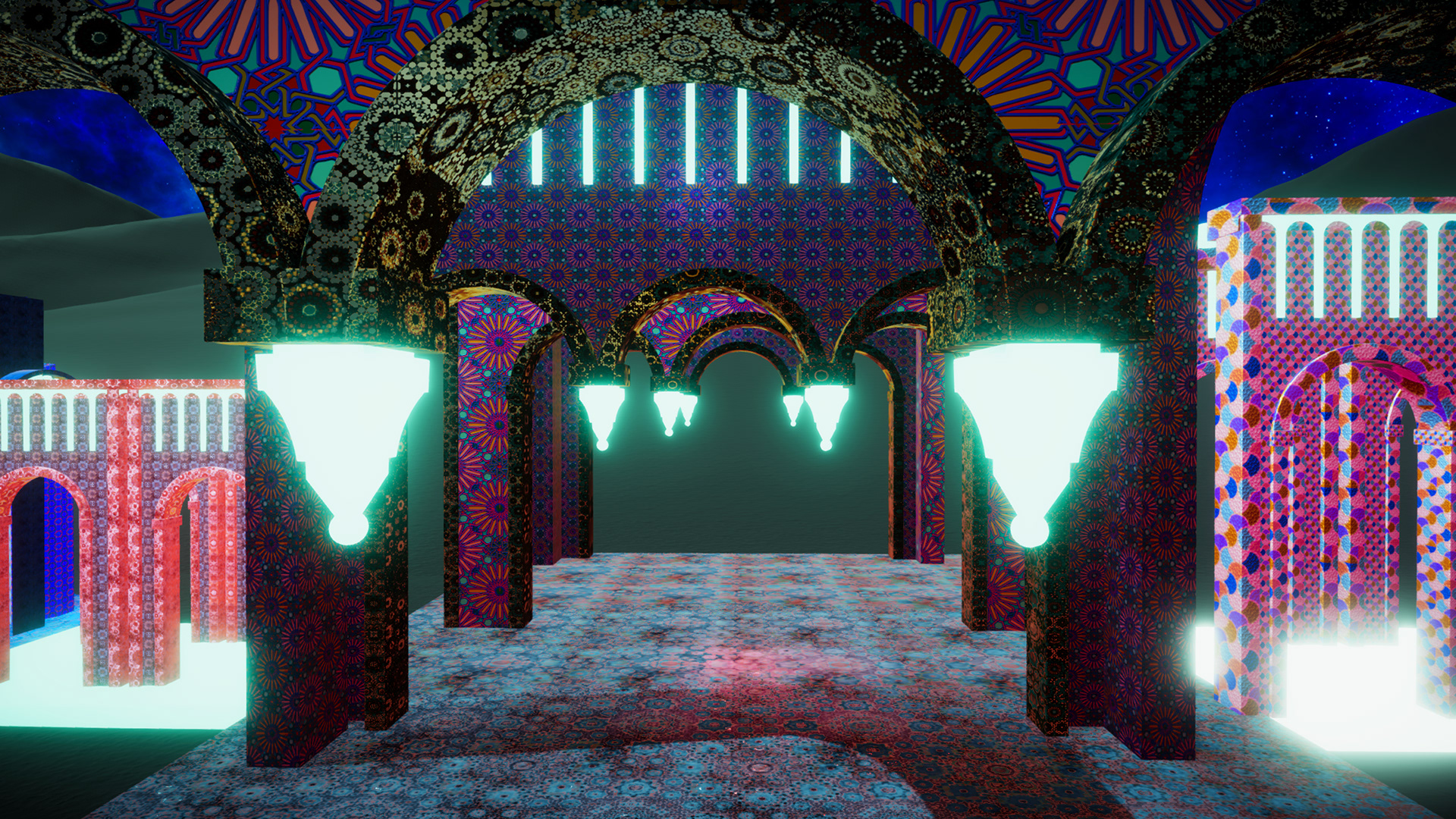
⟷ Second Room
Third Room⟷ (Animated Roof)
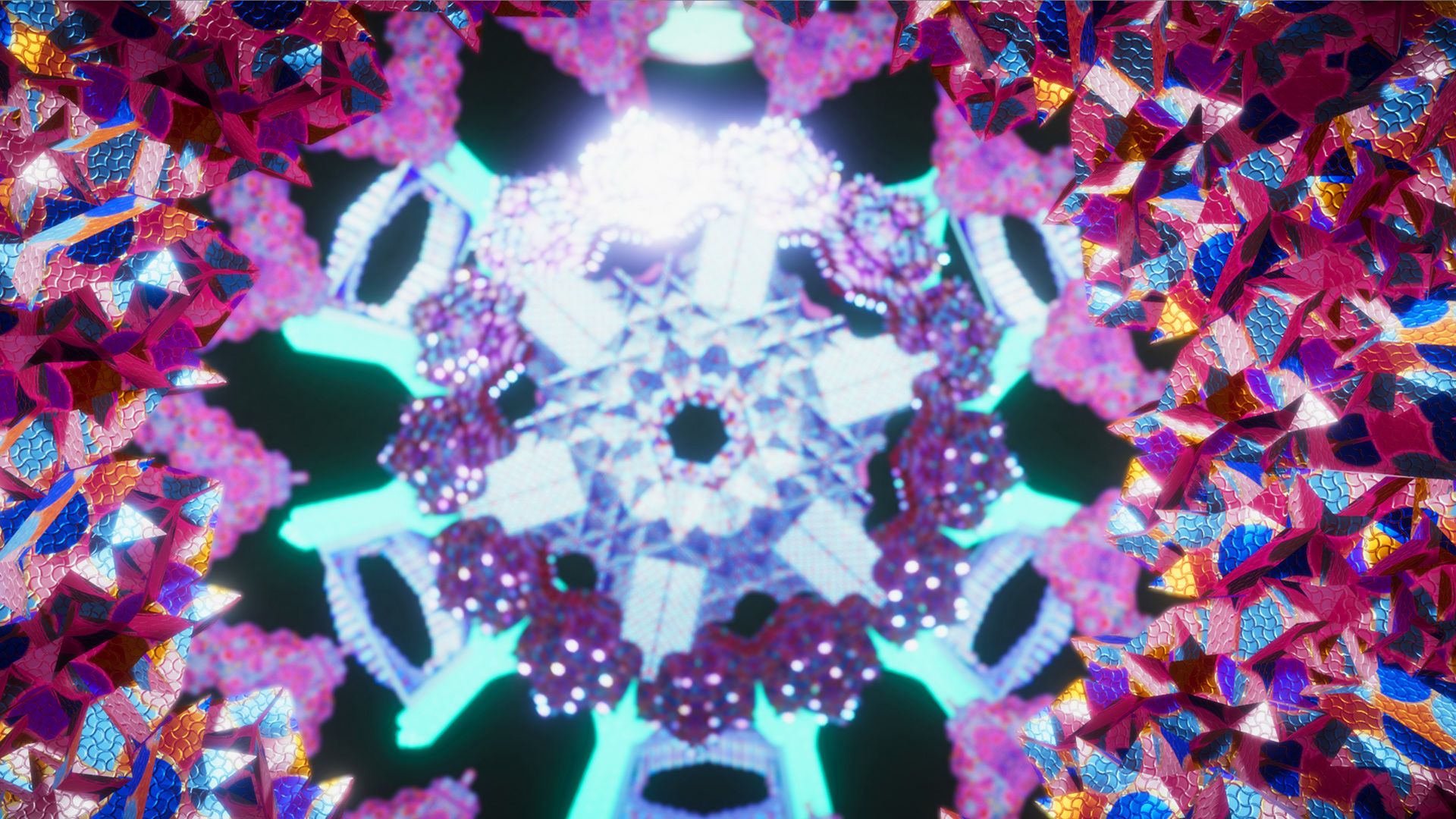
"Sound carries the mystical atmosphere of the piece. I used the sound of the tabla to form a mantra, mixed with wind and space sounds, which turned the space into a distant, oriental place somewhere in the Sahara. I worked with small musical accents to underline the abandoned, melancholic mood of the room — using old songs from my parents' collection, letting the place come alive through old central asian music and the memory it carries. The accents drift in and out with the wind."